Monday, March 7, 2011

Lets Check in out West...

Now where are we?

We had a Civil War, a president assassinated, and 3 Amendments added to the Constitution.

Now I suggest we head out West.

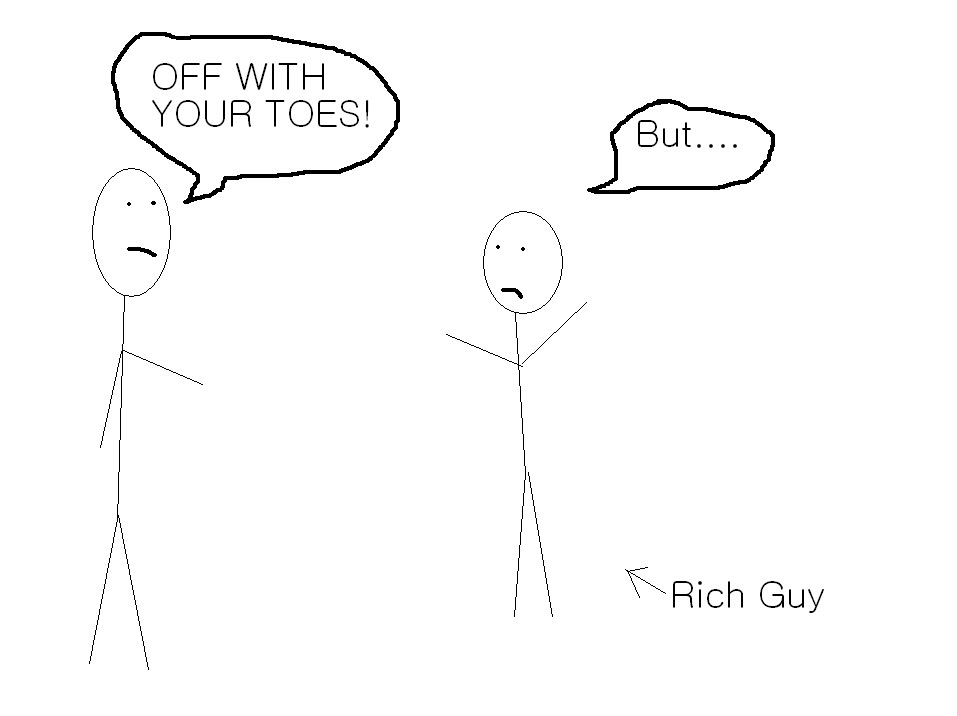
Remember all those Native Americans we moved off their land? Yah, well we decided that the land we put them on had some sort of use to us.


Out on the Plains we had Sioux, Blackfoot, Cheyenne, Kiowa, and Comanche Indian Tribes.

They spent their lives peacefully following the buffalo (Actually...it was the American Bison, there really are no Buffalo in the United States...but that's ok, we can call them Buffalo.)


In 1800 there were around 60 million buffalo on the plains, by 1894 only 25 remained.

This was basically because white people sort of suck. We figured if we destroy the buffalo, the Plains Indians would have no food, no food = no Indians, no Indians = more land.

Railroads even offered special buffalo hunts. This is when a passenger could shoot buffalo from a moving train. No, seriously.


So, we had people shooting buffalo from trains. So did someone go out and pick up the dead buffalo? No...they just stayed there..rotting in the sun. This was pretty gross.

This was a big slap in the face to the Indians, because when they shot a buffalo, they used every single part of it, while the white people just let it fester and rot. Sad face.

Tensions between settlers and the Plains Indians sometimes grew violent, like the case of the Sand Creek Massacre.

Some Cheyenne's had raided some ranches in Colorado.
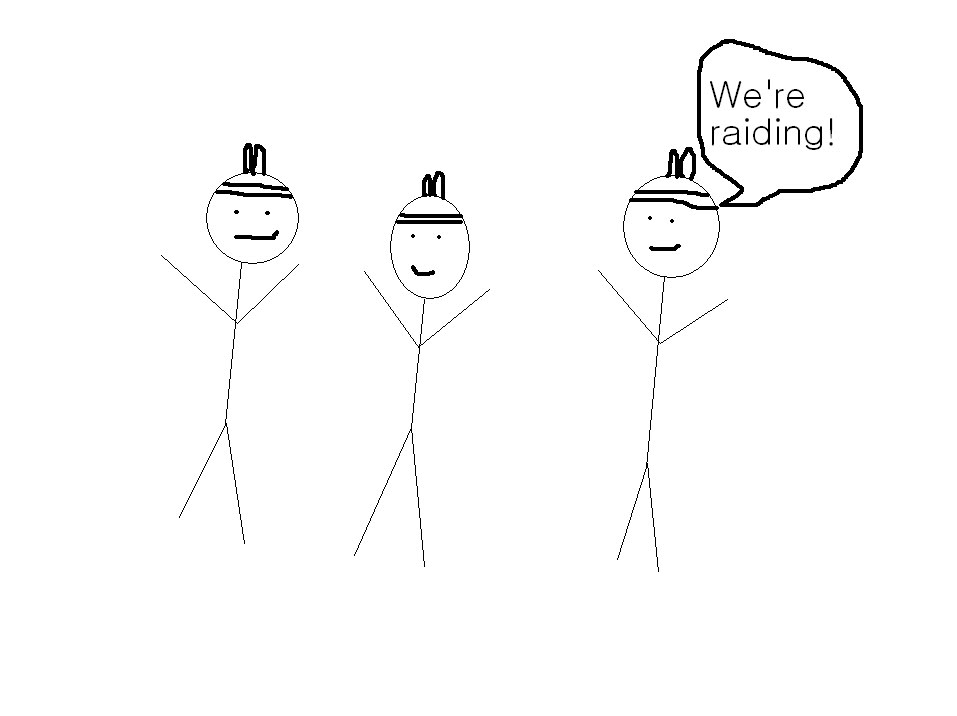

The U.S. Army said if the Cheyenne returned to their Reservation at Sand Creek, all would be forgiving. This however, would not be true.

When the Cheyenne returned, their Chief, Black Kettle, raised an American flag and a white flag as a sign of peace.


This is how the Army decided to react...

And so, 700 troops opened fire and killed 150 people, mostly women, children, and the elderly.

After they burnt down the Reservation, it was time to pack up and go home.


Of course there would be more things to come...

Tuesday, March 1, 2011

End of Reconstruction

These laws that were made to keep African Americans in a form of slavery were called Black Codes.

Some of these included signing a work contract for one year. If they quit during this year they would receive no money.

They were no allowed to rent property, in some states they were not allowed to own guns, in the states that did allow guns they were often taxed.

They could aslo be arrested for joblessness, basically, things still really sucked.

The time of Reconstruction also launched the formation of the Ku Klux Klan. This was a "social" organization

They wore white sheets and harassed African Americans.

They terrorized them by burning their homes and even murdering them.

They are and are still idiots.

People in the North were not happy about what was going on in the "dirty south", as Ludacris would later call it.

In come the Radical Republicans, they went with 'radical' because the word gnarly didn't flow as well, anyway, what they wanted was equality.

Congress passed the Civil Rights Act, it said if white people can do it, so can black people.

President Johnson vetoed this Bill.


Johnson was a vetoing machine, Congress did not like this, so they took it upon themselves to pass the 14th Amendment. This gave citizenship to anyone born or naturalized in the United States.

Johnson and Congress continued to butt heads.


Because of all the vetoes and the firing of some people, President Johnson was impeached for abuse of power.

He was tried, but conviction never came, only 1 vote separated his fate.


Also during this time, the 15th Amendment was also passed. This gave black men the right to vote. Women? No, are you serious? Women voting? HAHAHAHAHAHAHAHA...

Speaking of funny things, how about the words carpetbaggers and scalawags, those words came center stage during this time period, and trust me, you did not want to be called one.

Scalawags were usually Southernets who were not farmers nor slave owners. However, the war did leave them in financial ruin.

They became Republicans in hopes laws would be passed to forgive debts.


Carpetbaggers were Northerners who moved South for political gain. These people weren't seen favorably because they were looked at as selfish and just wanted to get ahead for themselves.

Later on Hillary Clinton was referred to as a carpetbagger after moving from Arkansas to New York to run for Senator.

But perhaps the most famous carpetbagger of all was Mary Poppins. She wasn't a Carpetbagger in a political sense, but in the sense that she carried a carpet bag...and inside that carpetbag she carried the world, and she did it in the most delightful way!


Reconstruction eventually came to an end, the South still held a lot of anger towards the African Americans, things improved a bit...like Hiram Rhodes Revels becoming the first African American to serve in the Senate AND he was from Mississippi, thats impressive.

While there were some improvements, conditions for African Americans remained pretty hard.

Thursday, February 24, 2011

Ladies and Gentlemen, Andrew Johnson....

Andrew Johnson became the 17th president of the United States.

Johnson launched his plan for Reconstruction which would restore the rights to white southerners, but first, they had to take an oath of loyalty.


Johnson also required Southerners who had over $20,000 to apply for a pardon. Johnson himself decided on punishments for these guys. The problem was, Johnson sort of hated the rich.


Congress was uneasy about this, and they sent him a letter. They asked him to suspend his plan and work with Congress to come to a more reasonable solution.

As Michael Scott of Dunder Mifflin would end up doing many years later, President Johnson filed this in his "important papers" file.


The Republicans were concerned because Johnson didn't seem too interested in African Americans taking part in government.

Well, the truth was, he wasn't. He felt that only white men should manage the South.

Because of this, many pre war politicians were back in power in the South. They wanted their lives to go back to as normal as possible.

Because of that pesky 13th Amendment, they couldn't keep slaves, so they had to come up with some other ways to keep things unequal.

Thursday, January 13, 2011

Peace At Last...Now What?

The South was in ruins, many farms were suffering from neglect. Railroads were useless and about 1/5th of the South's white males were dead.

Then there were 4 million newly freed slaves who had no money or education.

This is what I would refer to as bad news bears.

We are now entering the time in our history called Reconstruction.

Congress went to work trying to figure out how to make things better in the south. One idea was the Freedmen's Bureau. This was created to help blacks and whites who were uprooted by the war.


Reconstruction was argued about a lot. Everyone had different opinions on how it should be done. It was very frustrating.


General Sherman even had a part in Reconstruction. He split up a lot of land in the south into 40 acres. He offered this land to any formerly enslaved family for them to live on and farm.

So, for an apology of years of abuse and torture, they got some land and a mule.


As it would turn out, things were going to get worse.

Lincoln and his wife went to a play at Ford's Theater. They saw "My American Cousin". During the play, a very famous actor named John Wilkes Booth decided it would be a good idea to shoot Lincoln.

Lincoln was dead only 2 weeks after Lees Surrender. His body was taken back to Illinois where he was laid to rest (you can visit Lincoln's tomb in Springfield, while you are there, check out the super awesome Lincoln Library, seriously, its good stuff).

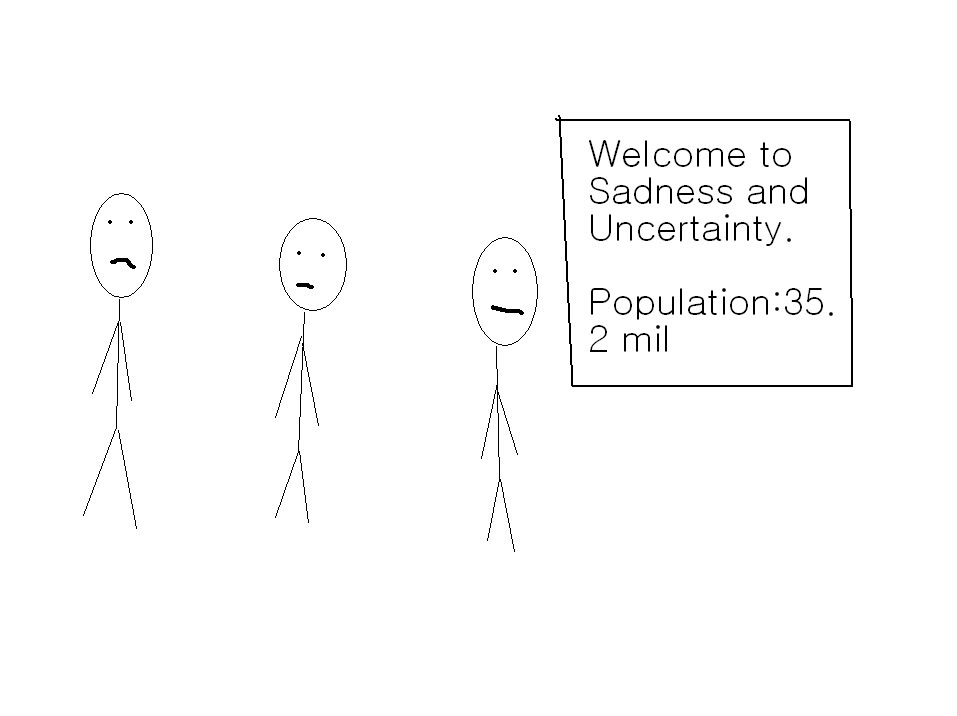
The country was in a state of sadness and uncertainty.

Saturday, January 8, 2011

Civil War Comes to a Close

Grant's troops were able to break through Confederate lines and they were headed directly for Richmond, the Confederate capital. With Union forces approaching, the Confederates were getting out of Dodge.


Lee hoped to get away, but the Union caught up with them at Appomattox Court House in Virginia. Lee decided to surrender.

Lee and Grant met and chatted it up a bit and then Grant told him the terms of surrender. The Confederates were to hand over their weapons and leave.

The Civil War was over. The North was pumped, they were doing cartwheels.


People gathered outside the White House, Lincoln decided that a speech would not be needed, but went outside and simply said,


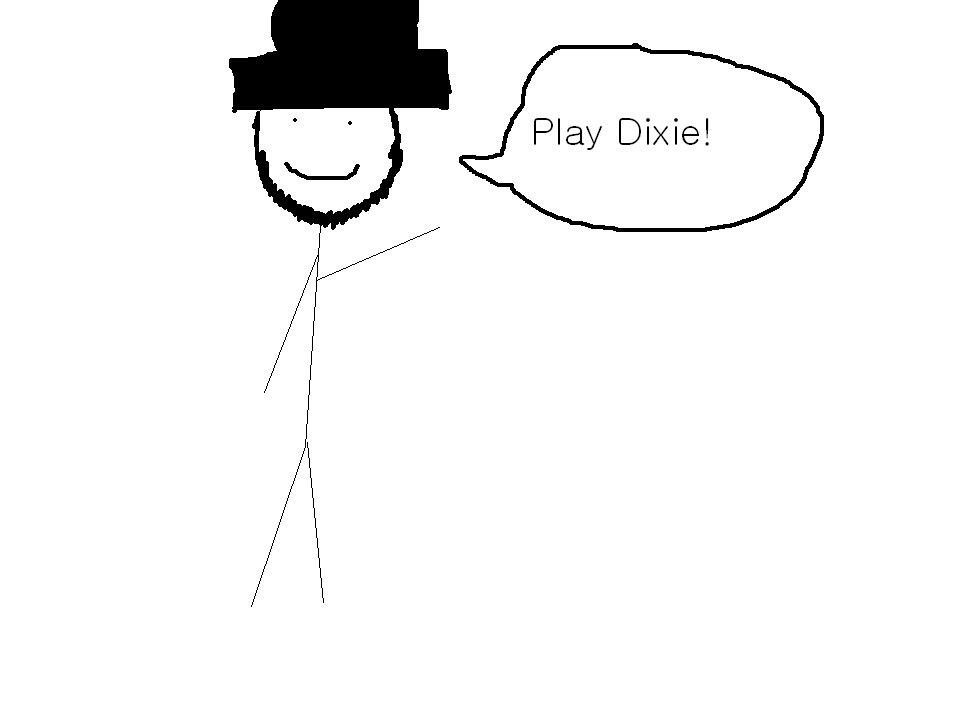
And the band played...

Wednesday, January 5, 2011

Sherman's March to the Sea

Meanwhile, down south, General William Tecumseh Sherman was marching through with his 100,000 troops, they were on their way to Atlanta.


The Confederates attacked Sherman's troops, but the only thing that accomplished was losing a quarter of the Confederate troops....ouch.

Sherman was easily able to enter Atlanta, and he brought Atlanta a present, he brought fire.


Sherman destroyed the city of Atlanta, as well as the railroad tracks. This was a devastating blow to the South.

Sherman's march also helped Lincoln get reelected in 1864. Along with this, the 13th Amendment was passed. This ended slavery. The war was winding down and Lincoln kept a positive attitude toward the South.


After Sherman burnt Atlanta, he continued his march to the sea to capture Savannah. Sherman's army left behind a destruction path of 300 miles long and up to 60 miles wide. It was a highway to hell.

Sherman's troops reached Savannah by December and had it wrapped up with a bow by Christmas.


After Georgia, they hit up South Carolina and North Carolina. Then Sherman was headed north to meet up with General Grant.

Monday, October 25, 2010

Grant, The Wilderness, and Cold Harbor

Lincoln knew things were going well for the Union, but he still needed a general.


Then he realized, Ulysses S. Grant.

In March of 1864, the new commanding general of the Army of the Potomac was Grant.

Grant was all about constant pressure, instead of periods of rest between battles, Grant preferred to keep on truckin'.


Unfortunately, these next meetings between the Union and Confederate soldiers would be pretty brutal.

Grant and his men crossed into Virginia into an area known as The Wilderness. And in the Wilderness is where General Lee decided to attack.

Most of this battle was close range fighting. Hand to hand combat and shots being fired set the wilderness on fire.


There were wounded soldiers trapped in the burning forest, many begged to be shot so they would not burn to death.

18,000 casualties for the Union and 10,000 for the Confederates. This was not good.

But Grant decided to press on and the Battle of Cold Harbor began.

Grant decided a frontal assault against the Confederates would be the game plan, unfortunately, this game plan was terrible.

Things were so bad that soldiers were sewing their names into their clothing so they could be identified if they died. So far, all the dead were pretty much unrecognizable.

General Lee defeated Grant and in 12 days of fighting the Union had lost 13,000 men. Cold Harbor was bad news bears, and Grant knew it.